In development

It’s time for a modern sampler.

We’re building one: a hands-on performance sampler and sequencer. This is the bench it’s being built on, photographed every week, with the songs it plays and notes on how it’s going.

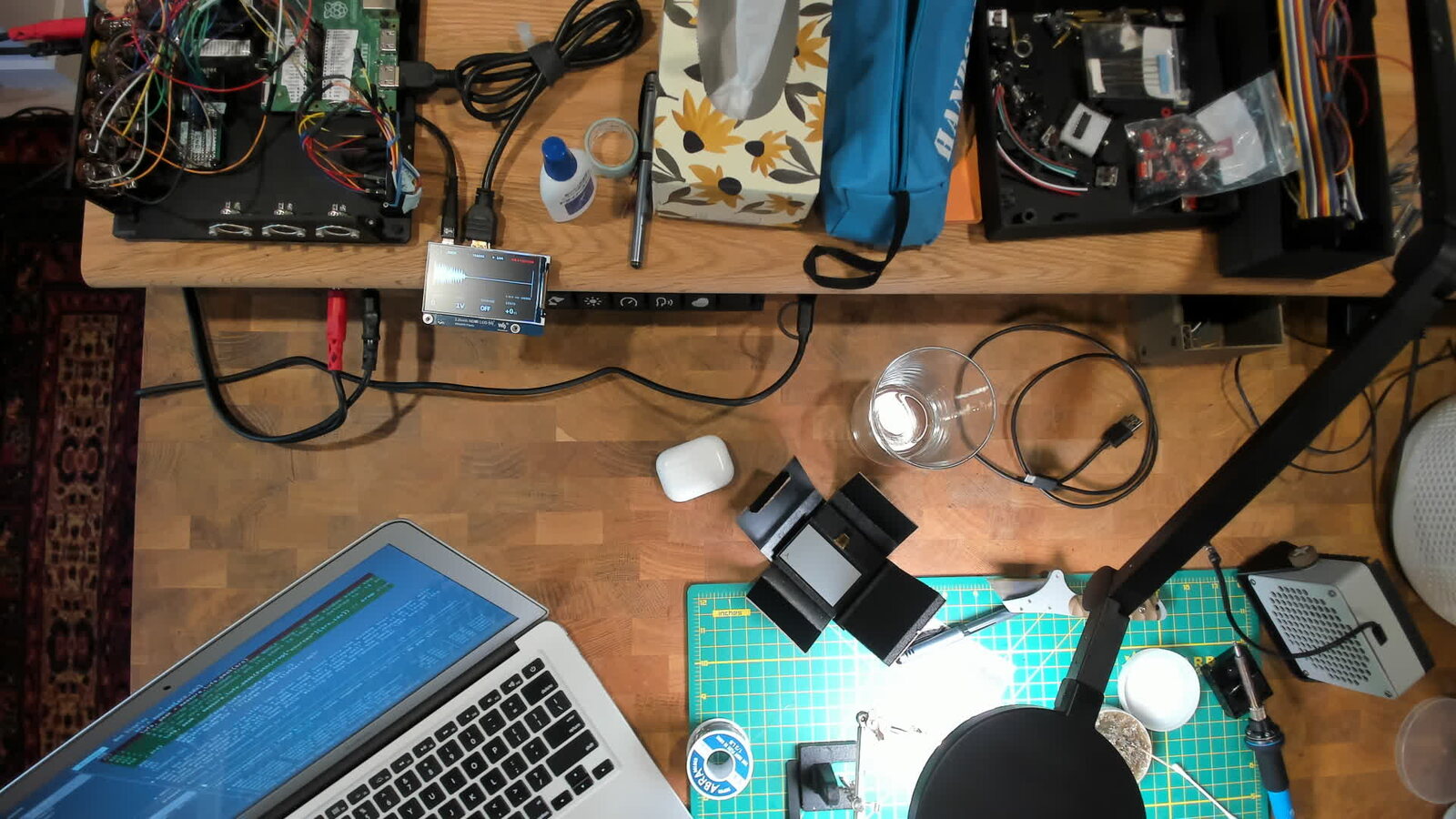
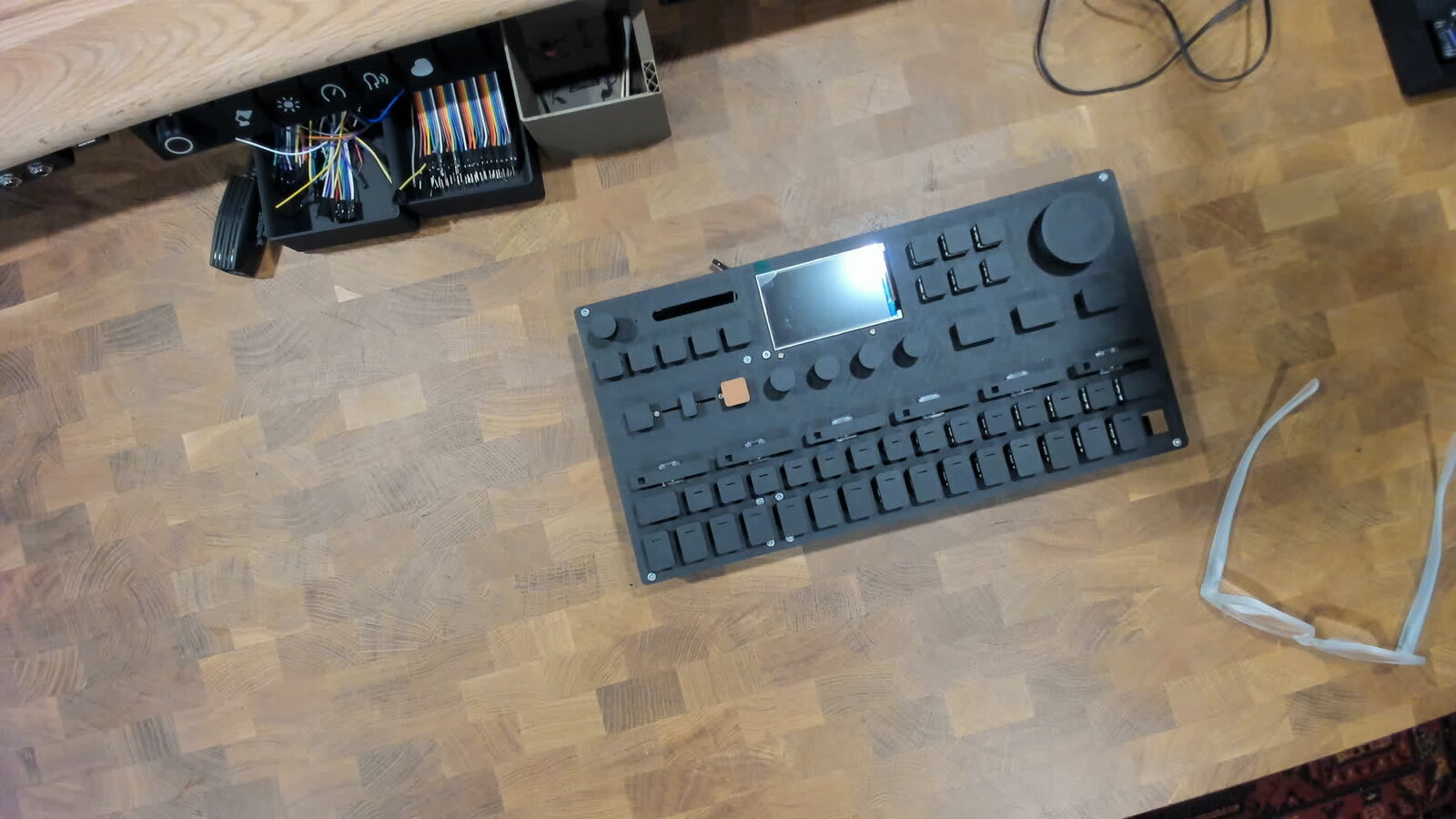
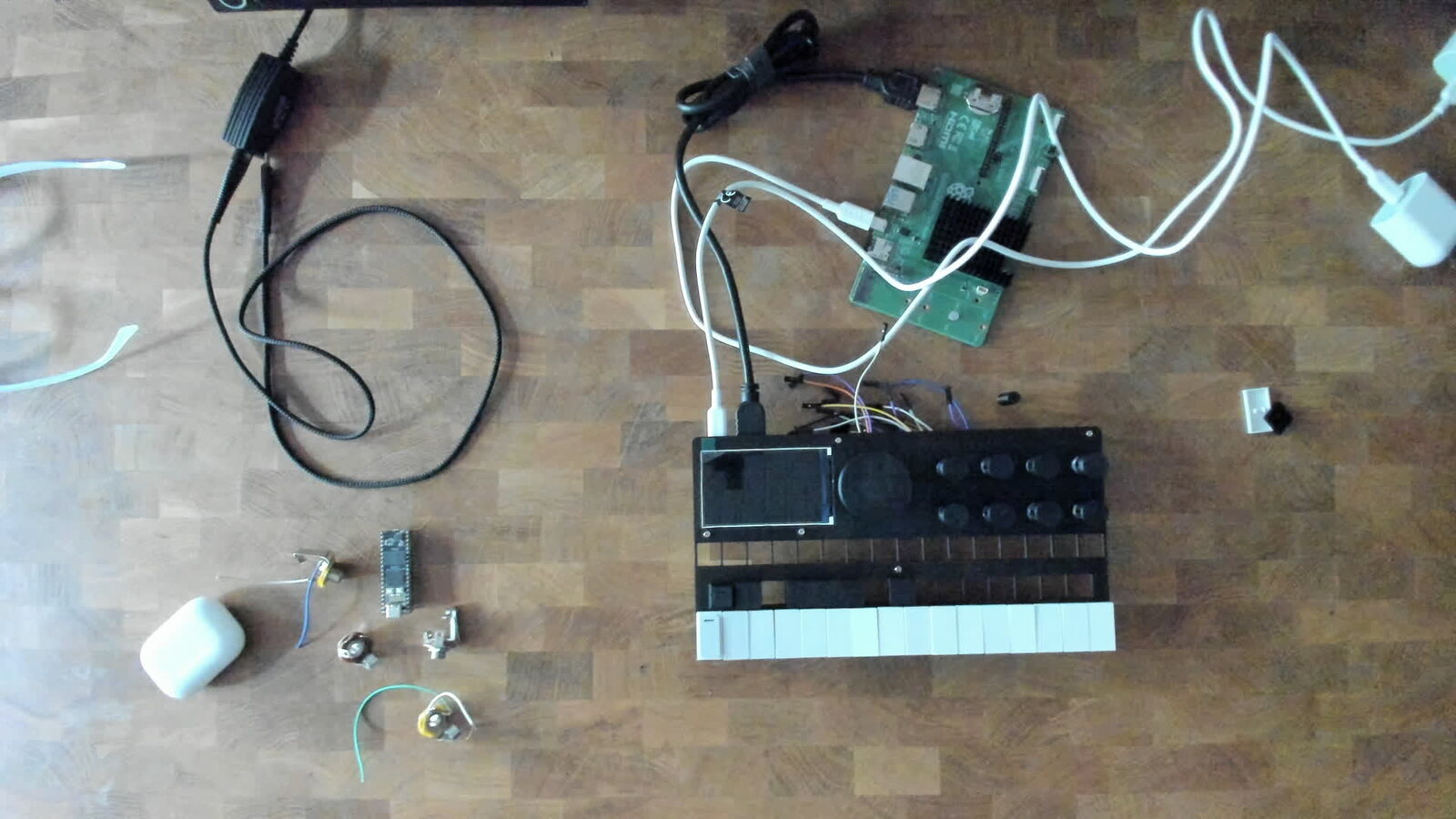
The workbench, seen from above Fig. 09 On the bench
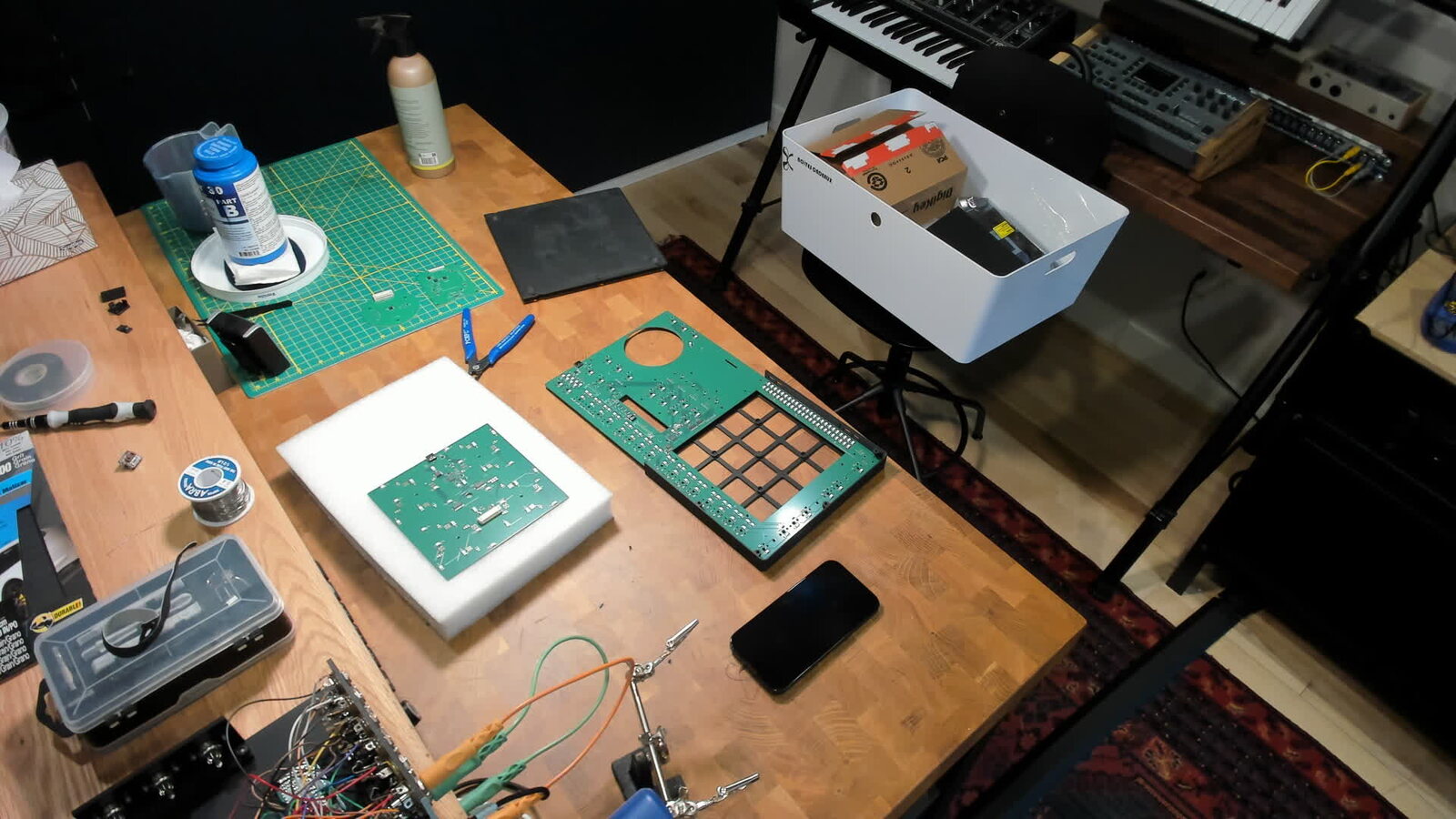
Week 09 Received the first order of PCBs, and molding pads in the back

Build log

Close to a real box

I am getting very close to a real box I can carry and demo to others! Can’t wait. The first order of custom PCBs came in today, and I ordered the second order, the big and final PCB: the audio brains and ports. Also getting quotes for an aluminum enclosure and high quality keycaps.

It is surprisingly hard to make keycaps that look good and feel good. I’m aiming for 0 wobble. And no backlight! Just a small dot of light. But that brings the problem of light bleeding from one key to the other.

I also started casting the pads. Just a coupon for now to test the feel and color.

Next week will be bring up for the PCBs I received and testing.

This is fun, and I’m learning a lot! But I’m also itching to get back to the software part of it 😁
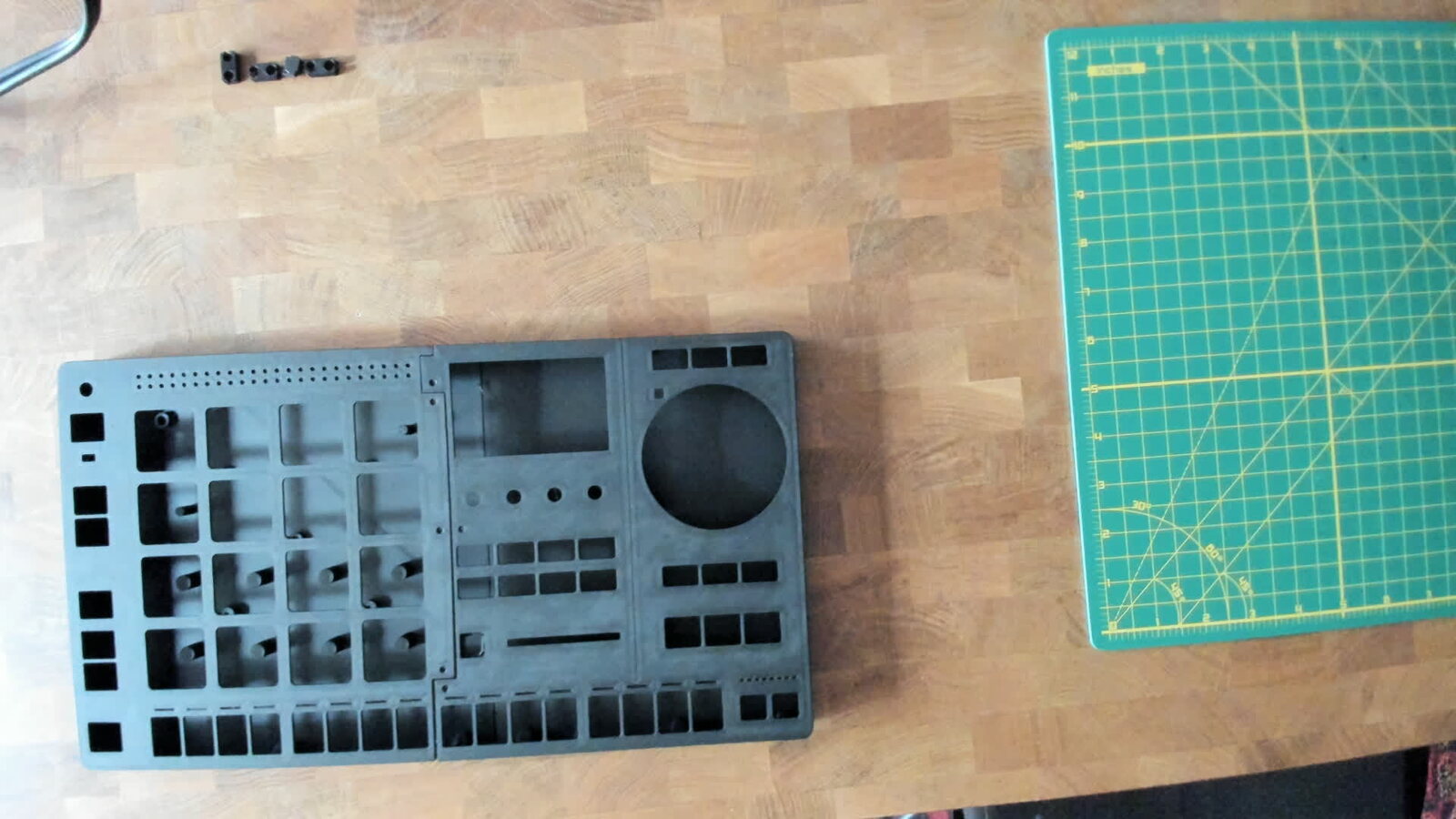
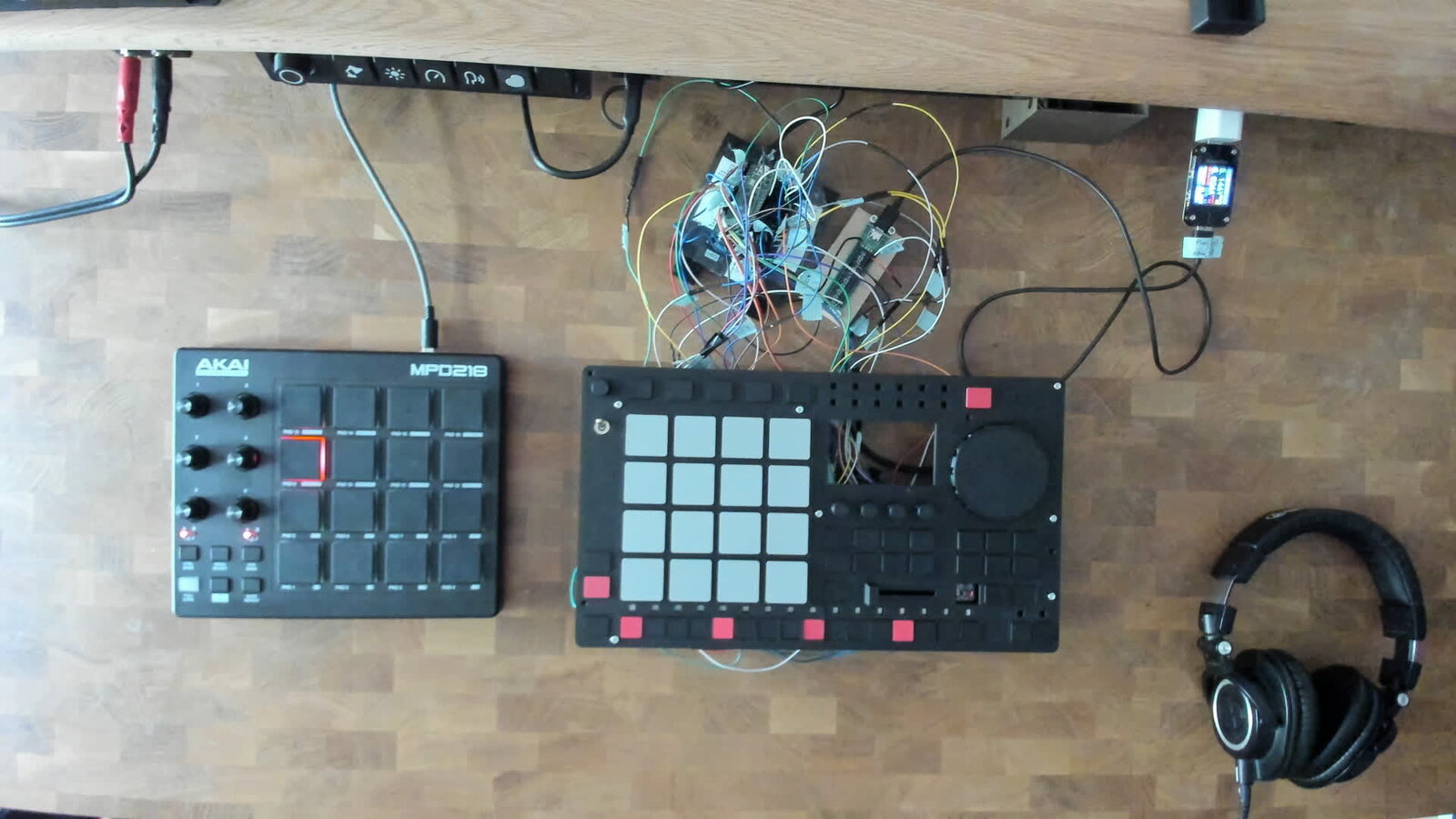
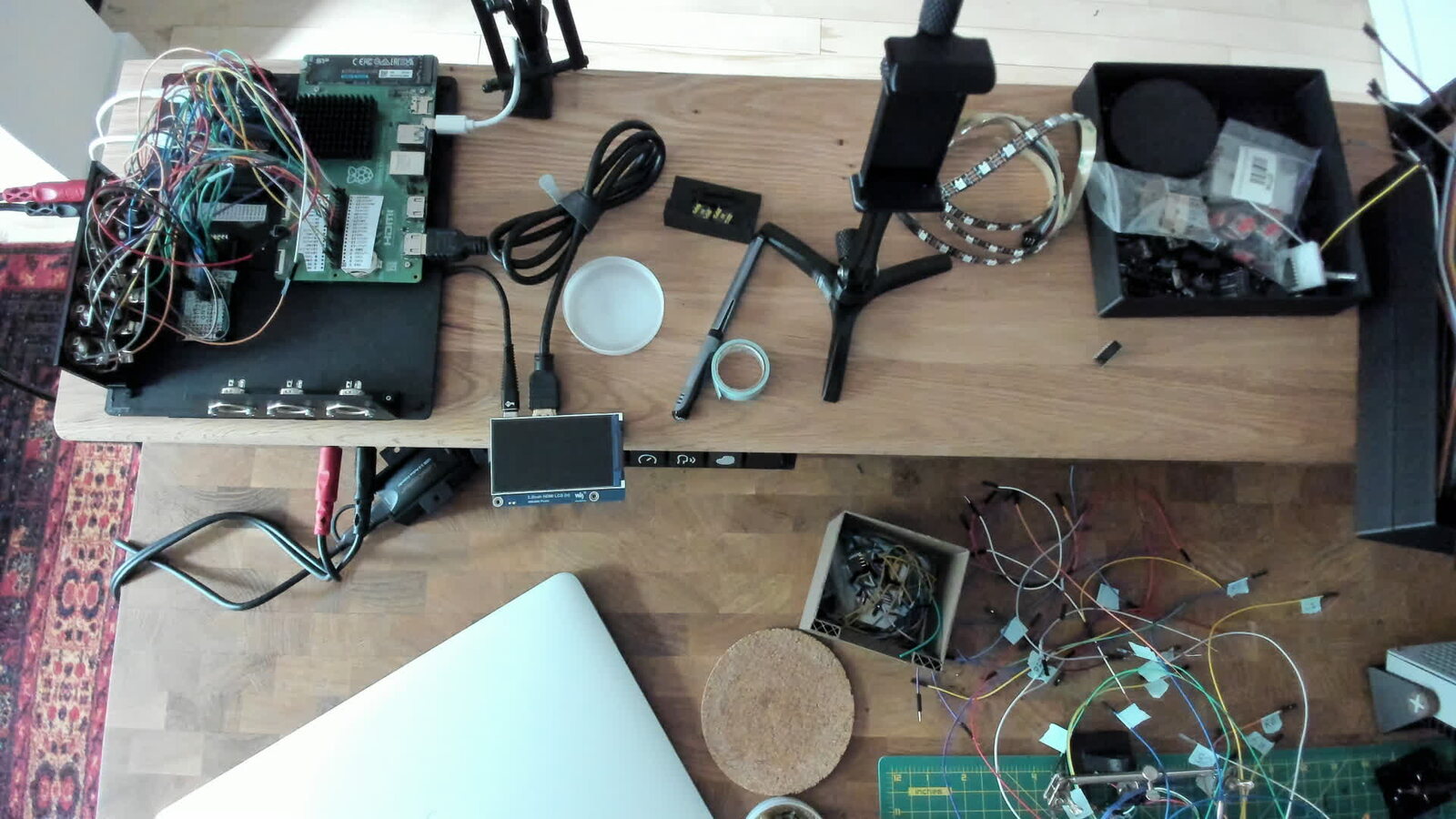
The workbench, seen from above

Custom PCBs ordered, the printed enclosure is together, and custom plugins now run on the hardware

Needle Work

0:0092 BPM · boom bapMP3

Some setbacks w/ the display, audio noise, and pad silicone, but still progressing nicely. I spent all my tokens last week trying to create a custom PCB. And also, big news… I got accepted at NAMM in January.

— Marc

The workbench, seen from above

Got most of the components up and running, except display and pads

Scratching on the box

Me pretending like I can scratch on the wheel and the fader: the deck is the box’s own, the screen is the box’s own frame buffer, recorded live and set into the display opening (I still need to wire the new Memory LCD display), and the sound is the box’s output (there is a noise issue, working on it…).

The wheel and fader can be assigned to any parameter on the box.

The workbench, seen from above

Preparing to test a new display, while Claude runs tests on the hardware

Cold Slide

0:00142 BPM · UK drillMP3

Another busy week. I had to upgrade to the Claude Max 20x plan 😆

This week’s song focuses on the 808, built from a synth and a couple of effects on the device, and on making the whole song sound premium.

To get there, I refined my testing harness to generate demo songs with Google Lyria (which is amazing). Claude extracts the stems and rebuilds the song on the device. When gaps show up, they’re queued to be fixed, and when a fix is ready, it’s queued up for me to audition blind before it gets committed and built upon.

While this is running, I’m working on the hardware, and testing a new display: a Sharp Memory LCD. And… I burned my 2nd Raspberry Pi Pico 🫠 while probing it with the multimeter. 3rd one on the way… lesson learned: no probing while it’s powered.

— Marc

Punch Beat

0:0090 BPMMP3

Five weeks working on the sampler. It’s hard to stop! I think I’m on to something :).

Early this week I spent some time hardening the hell out of it, and the result is solid. I was able to make and record the first full song without any crashes or glitches.

Last week I spent a lot of time building a full mastering chain with sidechain ducking on the device, and I think it’s paying off. The sound, out of the box, is great. And because it has a web API, I can ask Claude to master it for me (which I did here).

Although this demo barely scratches the surface, I’m very excited and proud of how easy it is to make something that sounds great, quickly.

A lot more awesome stuff coming soon!

— Marc

The workbench, seen from above

Adding compressor types and rewiring for the new button matrix

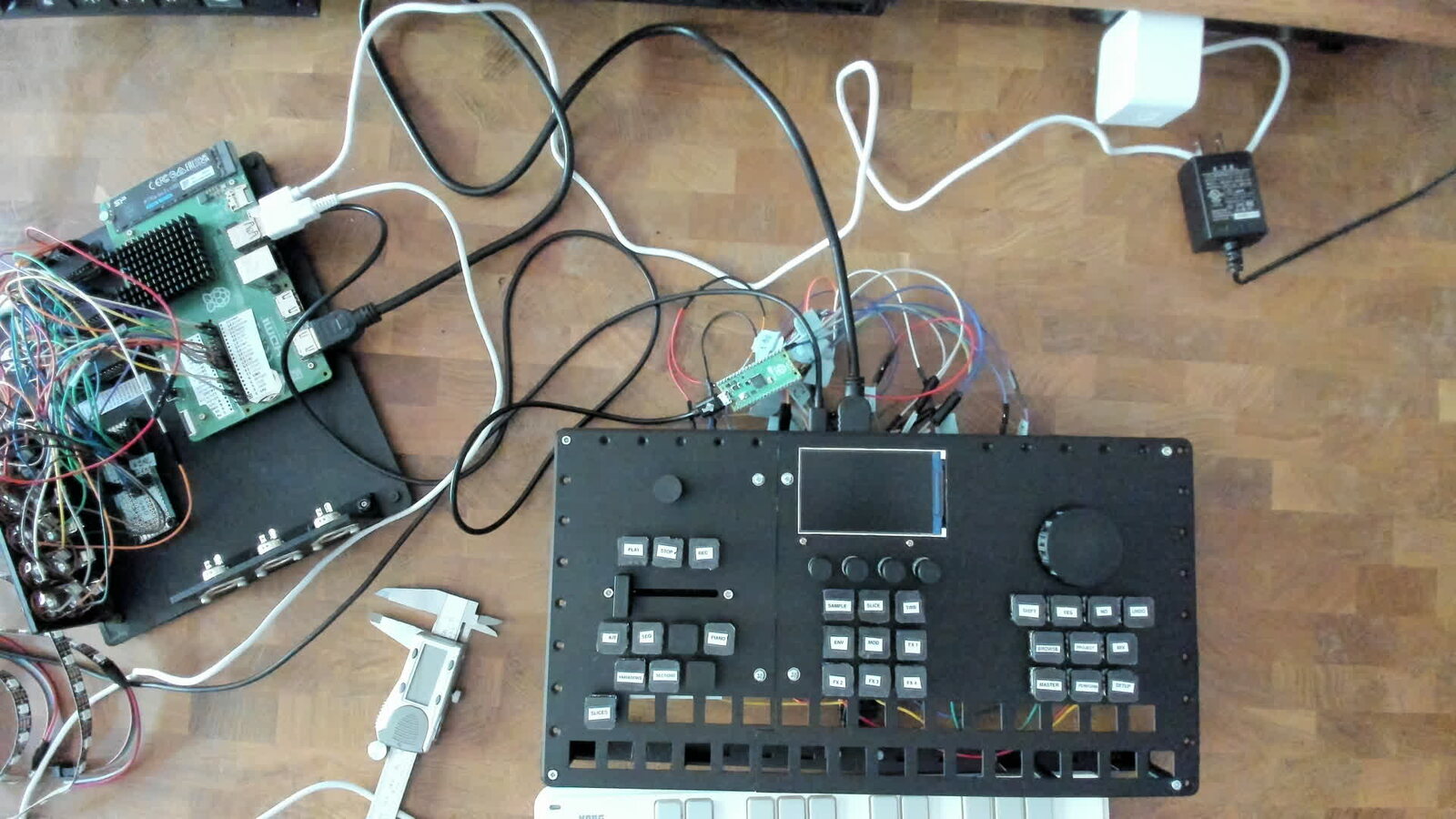
The workbench, seen from above

The new panel, all wired up! Korg nanoKEYS standing in for the steps keys.

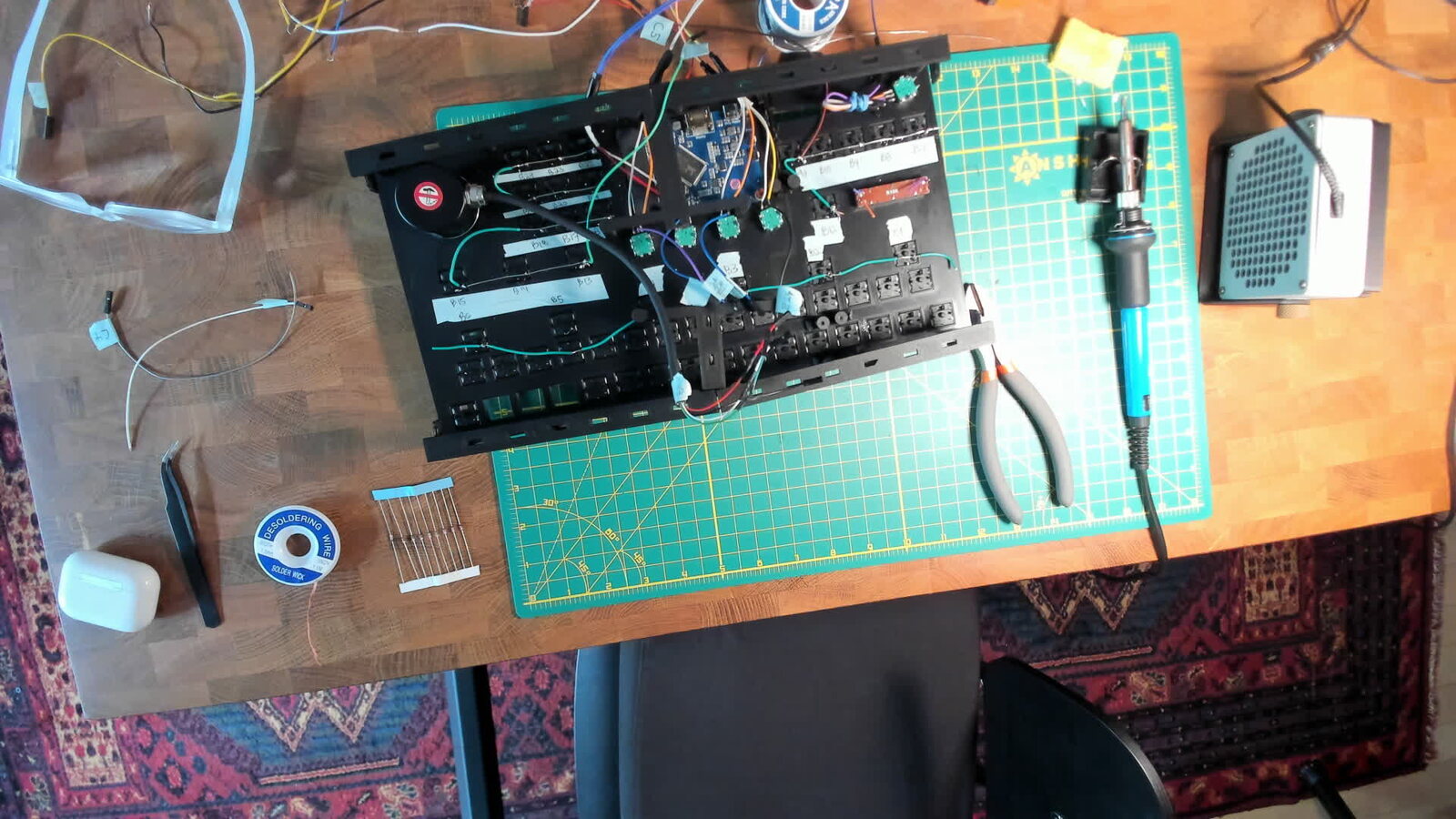
The workbench, seen from above

Hand-wiring the button matrix behind the panel.

The workbench, seen from above

First boards talking to each other, next to a mockup to get the layout under the hands

What we’re building

01

Hands on everything

Play it live, or program it step by step. Every sound and every move is one gesture away, with no menus in the way of the music.

02

Built for the stage

Dedicated audio processors do the sound while a separate computer runs the interface, so playback never stutters, whatever you throw at it.

03

Designed in-house

Enclosure, circuit boards, firmware and software, all developed by us from the ground up, and tested on the bench every day.

Company

Coded Machines is an independent maker of electronic musical instruments, founded by musician and software engineer Marc-André Cournoyer.

We make standalone hardware for sampling, sequencing and live performance, instruments meant to be played with both hands. Our first product is in active development, and this log follows it week by week.

Contact

hello@codedmachines.com

For dealers, press, partnerships and early-access inquiries, write to us. We read everything. For demos and more, follow @codedmachines on Instagram.